
Showcase measurable results and key achievements that make your experience stand out.
Core
✅ Clean the past experiences list to show the most important ones (if you have more than 5)
✅ Focus on impact in numbers, not tasks
✅ Add 3–5 skills per role for better search visibility
✅ Attach media to make your work tangible
✅ Use the Contract or Career Break options if they are relevant to you
✅ Keep your current role active if it supports your goals
Many visitors scroll past your About section and go straight to Experience. Recruiters do it. Hiring managers do it. Potential customers do it.
Why?
Because your About section is self-reported, but your Experience section feels like a structured, factual track record.
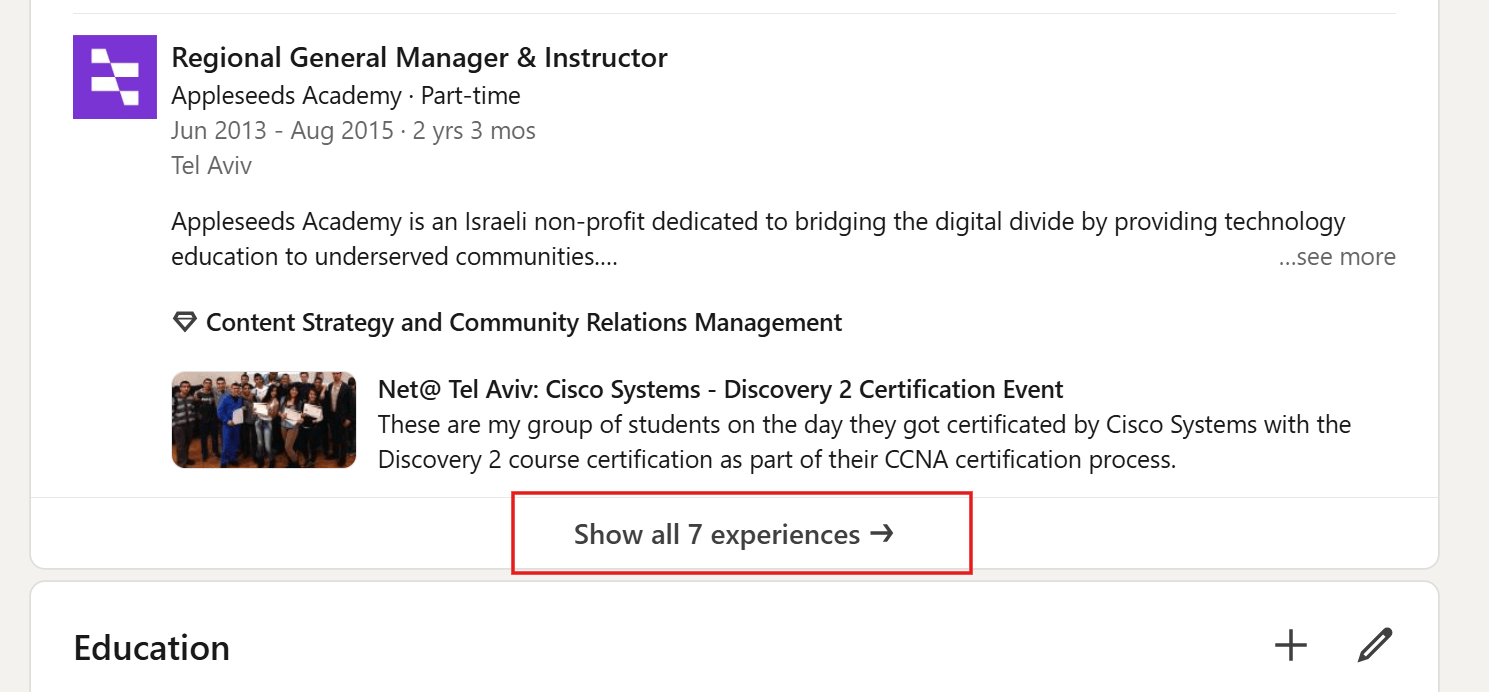
LinkedIn only shows the first 5 roles by default and hides the rest behind “Show all”.
If you have more than 5 roles, your profile might be unintentionally hiding your best work.
The biggest mistake people make is listing tasks instead of results.
Responsibilities tell what you were assigned to do.
Impact tells what you actually achieved.
Stronger Experience bullets use:

Focusing on impact should also be a leading aspect of your content posting strategy.
LinkedIn lets you attach skills to each job entry. These act as SEO signals for recruiter searches and strengthen the credibility of each experience block.
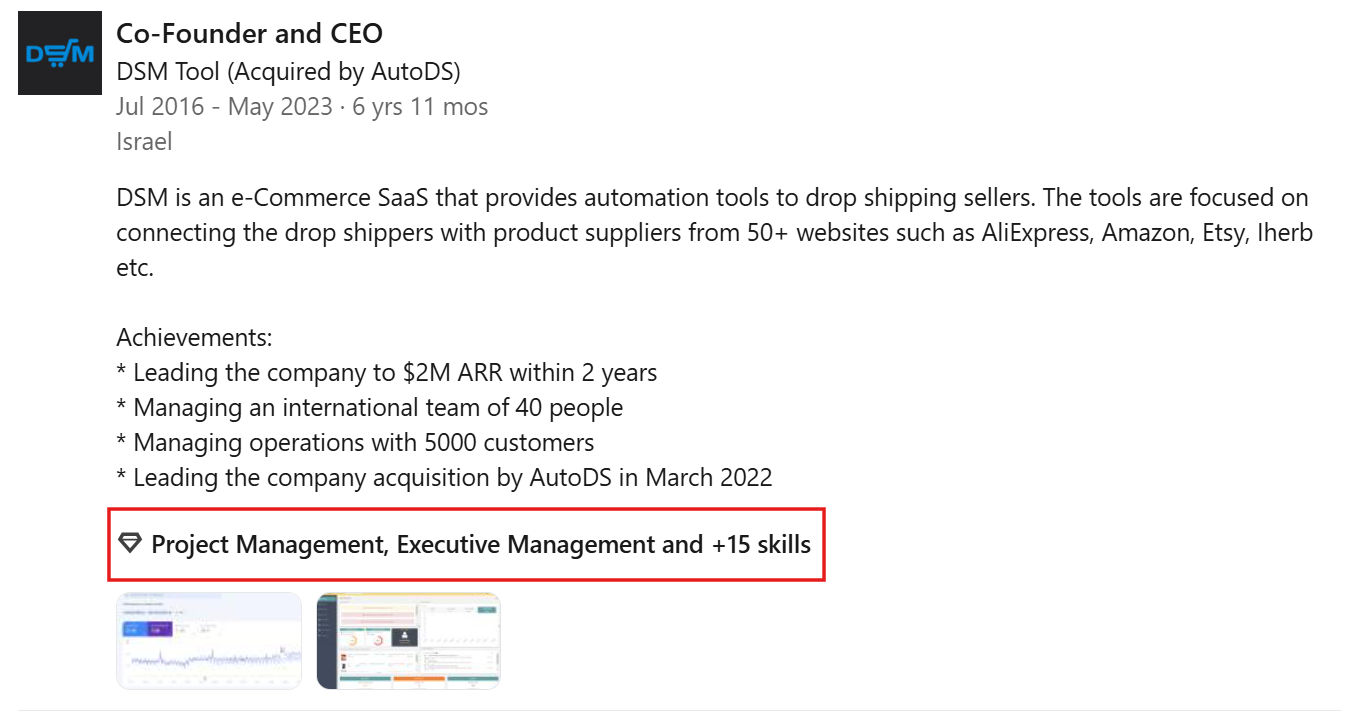
How to add skills:
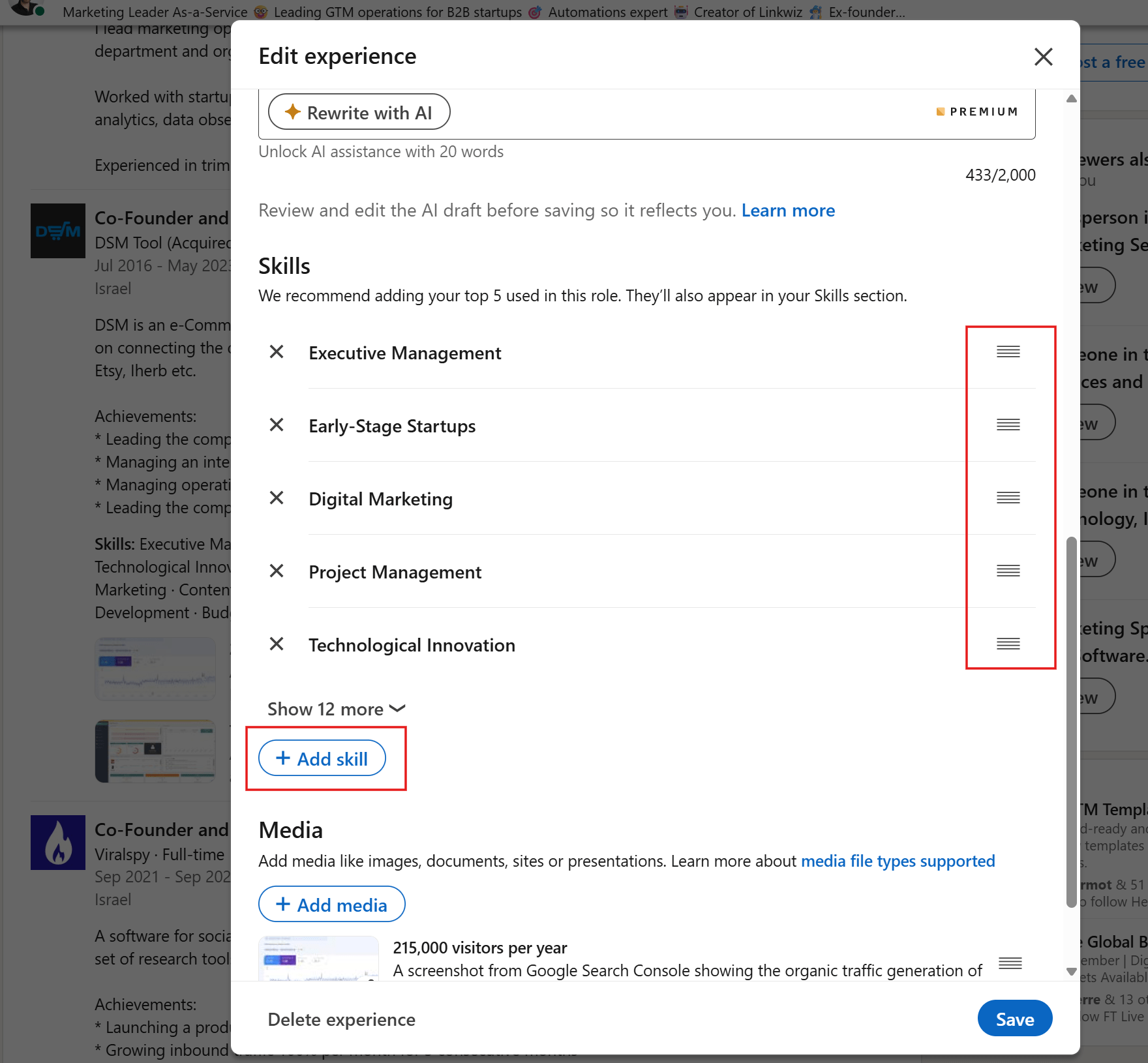
Best practices:
Your Experience section becomes far more persuasive when you attach real proof like:
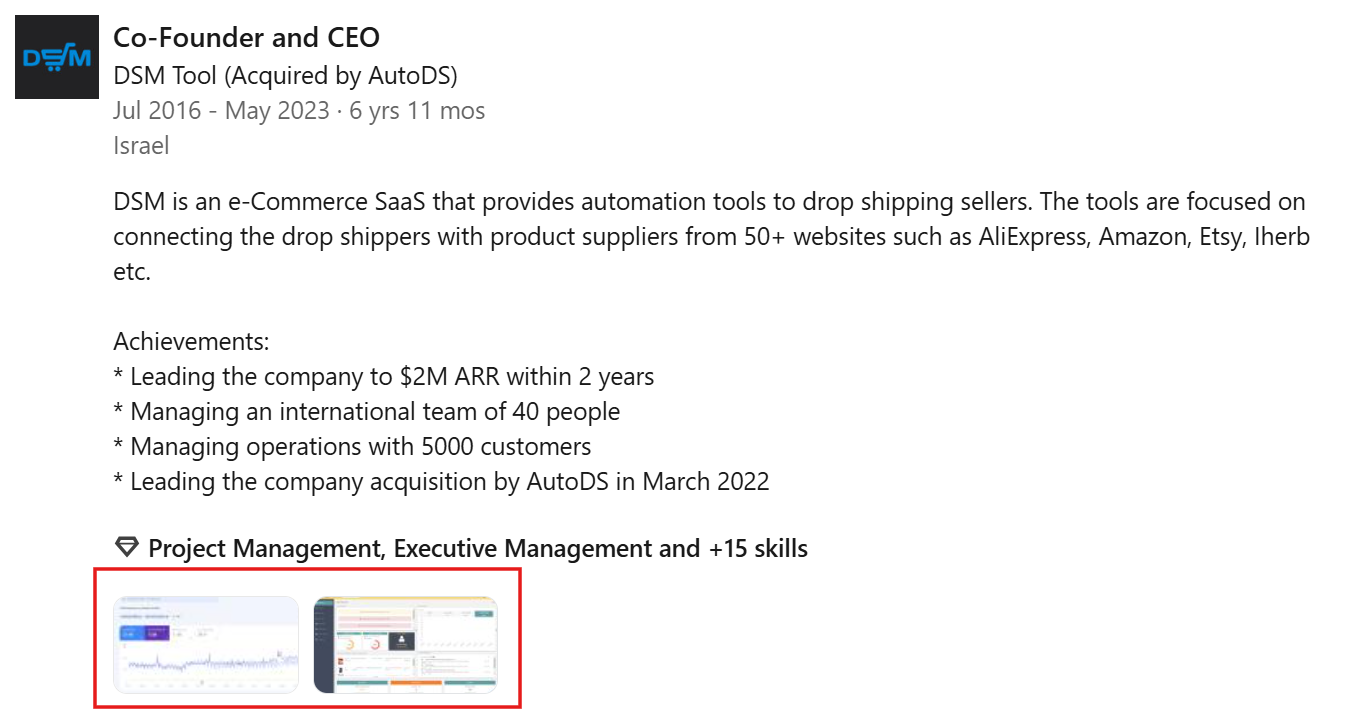
To add media:

If you work with multiple clients on a contract basis, your Experience section can double as a client portfolio.
Best practices:
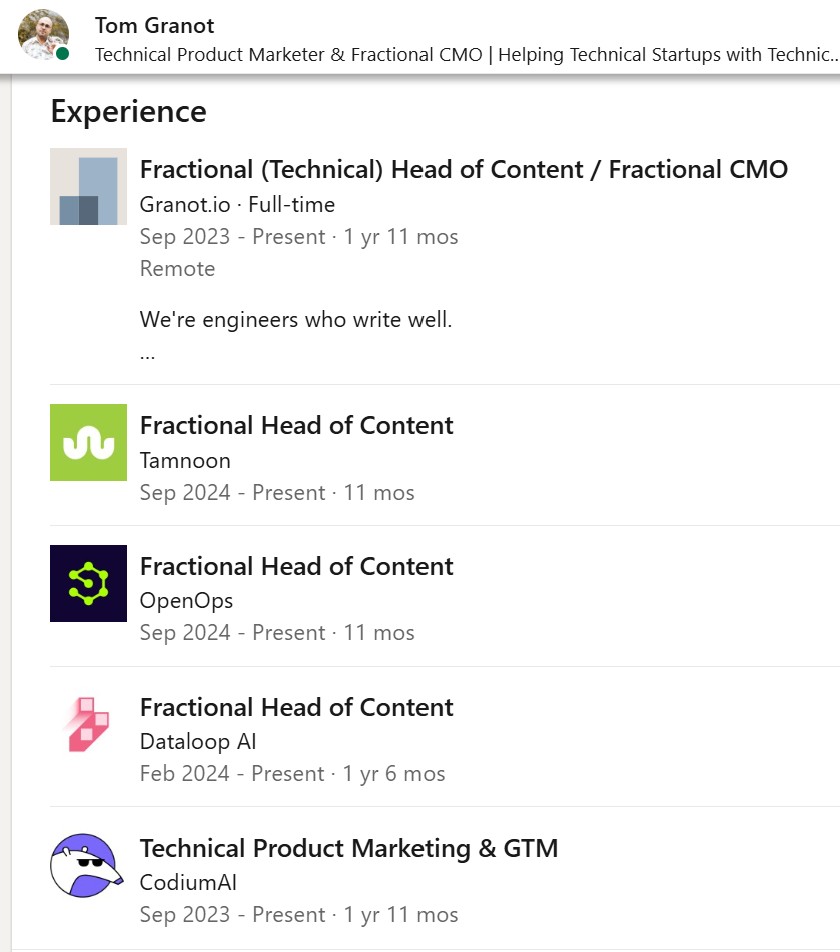
How to update Employment Type:
LinkedIn now has a dedicated Career Break category that adds clarity and removes stigma.
You can use it to describe:

Some people wait with listing their last job as “ended” even if they left it, until they secure a new one. showing current employment makes you appear more active or desirable to recruiters.
Consider keeping the role active if:

